Pet-Friendly Condos in York Region: What Every Pet Owner Must Know Before Buying
 If you are a pet owner searching for a condo in York Region — whether in Richmond Hill, Markham, Vaughan, or Newmarket — there is one critical step that far too many buyers skip entirely: reading the condo's pet rules before falling in love with the unit.
I have seen it happen more times than I can count. A buyer finds the perfect condo, pictures their dog running through the hallways, makes an offer — and then discovers during the status certificate review that the building prohibits dogs over 20 pounds. Or bans certain breeds entirely. Or limits residents to one pet per unit, when they have two cats.
As a licensed REALTOR® and Mortgage Agent with over 22 years of GTA experience, and as a genuine animal lover with a lifelong dream of opening an animal shelter, this topic is close to my heart. Here is everything you need to know before you buy a condo with a pet in York Region.
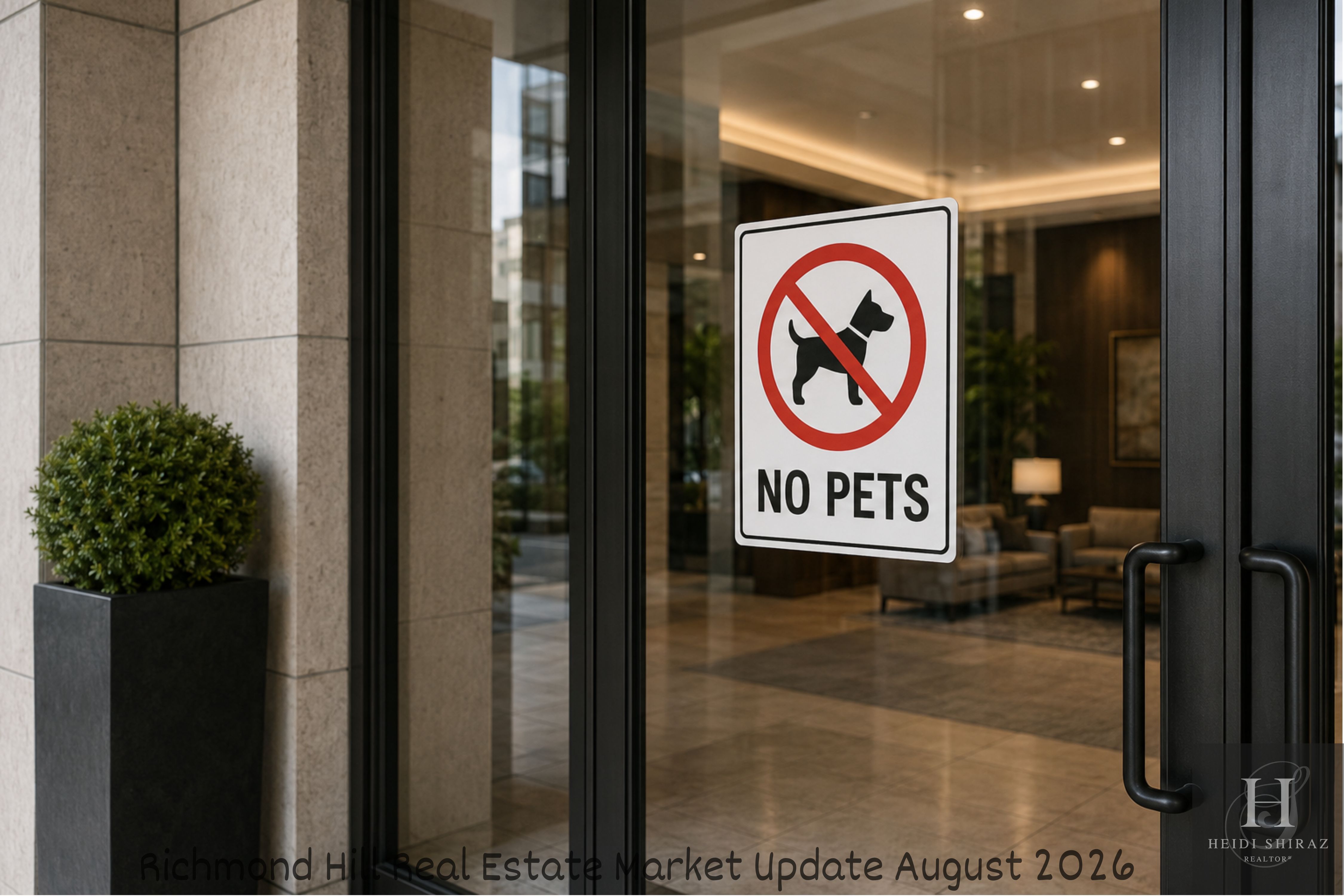
The Reality: Not All Condos Are Truly Pet-Friendly
The term 'pet-friendly' is used loosely in real estate marketing — and what it actually means varies dramatically from one building to the next. A condo that is technically pet-friendly may still have restrictions that make it completely unsuitable for your specific animal.
Common pet restrictions you will encounter in York Region condos include:
Weight limits — many buildings cap dogs at 25 to 50 pounds, which rules out most medium and large breeds
Breed restrictions — certain buildings prohibit specific breeds deemed high-risk, such as pit bulls, Rottweilers, or Dobermans
Quantity limits — most buildings restrict residents to one or two pets per unit
Species restrictions — some buildings allow cats but not dogs, or prohibit reptiles, birds, or exotic animals entirely
Common area restrictions — rules about where pets are permitted within the building, such as elevator use, lobby areas, and amenity spaces
Leash and carrier requirements — pets may be required to be leashed or in a carrier at all times in common areas
The critical point is this: these restrictions are not negotiable. Once you purchase a unit in a condo corporation with pet restrictions in its governing documents, you are bound by those rules — regardless of what a seller, agent, or building staff told you verbally before the purchase.

Where Pet Rules Live: The Declaration, Bylaws, and Rules
Understanding where pet policies are found in a condo corporation's governing documents is essential — because the location determines how enforceable they are and how difficult they are to change.
The Declaration
The declaration is the founding document of the condo corporation — essentially its constitution. Pet restrictions written into the declaration are the most powerful and most permanent. Under Ontario's Condominium Act, a condo corporation can legally prohibit pets — including dogs, specific breeds, or all animals — if that prohibition is written into the declaration.
Critically, unlike rules and bylaws, the provisions in a declaration do not have to meet a reasonableness standard. A complete pet ban in the declaration is entirely legal in Ontario, and changing a declaration requires an extraordinary majority of unit owners — making it extremely difficult to overturn.
If you are a pet owner and the declaration prohibits your pet, there is no workaround. Do not buy that unit expecting the rule to change.
The Rules
Day-to-day pet regulations — weight limits, leash requirements, designated pet areas, registration requirements — are typically found in the building's rules rather than the declaration. Rules are easier for a board to amend than the declaration, but they must be reasonable and consistent with the Condominium Act. Boards must follow a formal process before adopting or changing rules, including providing notice to owners.
Rules can be challenged at the Condominium Authority Tribunal (CAT) if an owner believes they are unreasonable or improperly enacted. That said, weight limits and breed restrictions that have been in place for years and are consistently enforced are generally considered reasonable by the CAT.
The Bylaws
Pet restrictions do not typically belong in the bylaws — bylaws govern the operation of the corporation itself. If you see pet restrictions in a bylaw, that is unusual and worth flagging with your lawyer.
What the Ontario Condominium Act Says About Pets
Ontario's Condominium Act, 1998 governs condominium living across the province. Under the Act, condo corporations have broad authority to regulate pets through their governing documents. However, there are important limits:
Service animals cannot be restricted. Ontario's Human Rights Code and the Accessibility for Ontarians with Disabilities Act (AODA) protect the right to a service animal. A condo corporation cannot prohibit a resident from having a service animal, even if the building has a no-pets policy. To qualify as a service animal in Ontario, the animal must be wearing a vest or harness identifiable as relating to a disability, or the owner must provide documentation from a regulated health professional confirming the animal's status.
Under Section 117(1) of the Condominium Act, any condition or activity that may cause injury or damage is prohibited — which gives boards legal authority to act against dangerous animals or pets causing damage to common elements, regardless of what the rules say.
Rental units have different rules. If you are renting a condo unit (not purchasing), Ontario's Residential Tenancies Act prohibits landlords from including a no-pets clause in a rental agreement — such clauses are unenforceable. However, if the condo corporation's declaration bans pets, the condo board can still require a tenant to remove their pet, creating a conflict between the RTA and the declaration that tenants should seek legal advice on.
Service animals cannot be restricted. Ontario's Human Rights Code and the Accessibility for Ontarians with Disabilities Act (AODA) protect the right to a service animal. A condo corporation cannot prohibit a resident from having a service animal, even if the building has a no-pets policy. To qualify as a service animal in Ontario, the animal must be wearing a vest or harness identifiable as relating to a disability, or the owner must provide documentation from a regulated health professional confirming the animal's status.
Under Section 117(1) of the Condominium Act, any condition or activity that may cause injury or damage is prohibited — which gives boards legal authority to act against dangerous animals or pets causing damage to common elements, regardless of what the rules say.
Rental units have different rules. If you are renting a condo unit (not purchasing), Ontario's Residential Tenancies Act prohibits landlords from including a no-pets clause in a rental agreement — such clauses are unenforceable. However, if the condo corporation's declaration bans pets, the condo board can still require a tenant to remove their pet, creating a conflict between the RTA and the declaration that tenants should seek legal advice on.
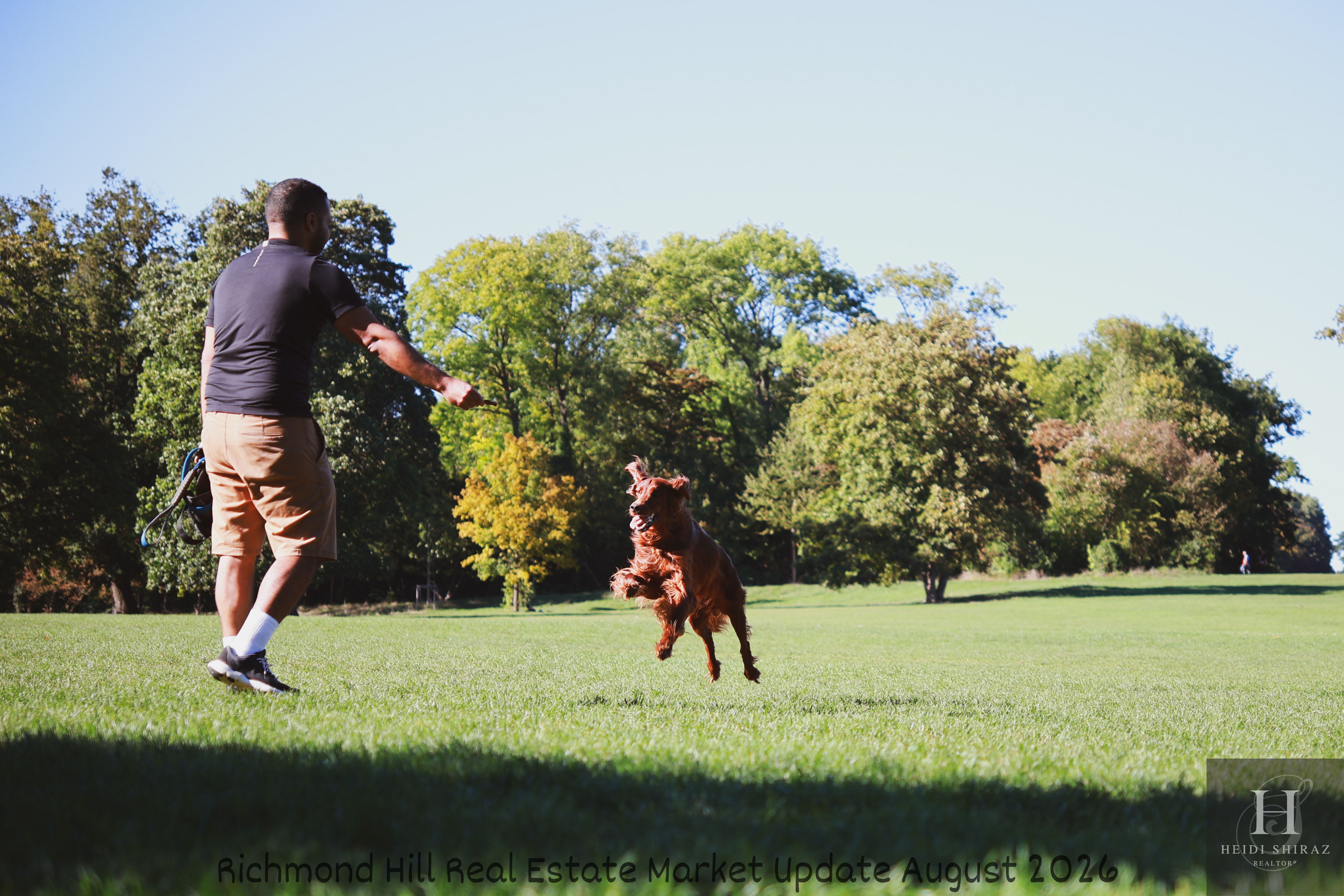 York Region vs. Downtown Toronto for Pet Owners: Why York Region Wins
If you are a pet owner torn between buying in downtown Toronto and buying in York Region, the lifestyle comparison strongly favours York Region — and here is why.
Green Space and Walking Access
York Region communities like Richmond Hill, Markham, and Vaughan offer dramatically more accessible green space than downtown Toronto. Richmond Hill alone is home to the Oak Ridges Moraine trail network, Lake Wilcox and its waterfront parks, Phyllis Rawlinson Park, and numerous neighbourhood parks within easy walking distance of most condo buildings. For dog owners especially, easy access to off-leash areas and walking trails makes a significant quality-of-life difference.
Lower Density, Quieter Common Areas
York Region condo buildings are generally lower-density than their downtown Toronto counterparts. Fewer units per building typically means less elevator congestion, quieter hallways, and less pet-related friction with neighbours. For large or energetic dogs, this can be a meaningful practical difference in daily life.
More Building Options at Accessible Price Points
With one-bedroom condo units in Richmond Hill and Markham currently available around $500,000, York Region offers pet owners more building choices at more accessible price points than comparable downtown Toronto buildings. More choice means a better chance of finding a building whose pet policies genuinely work for your animal.
 The 5 Questions Every Pet Owner Must Ask Before Making an Offer
The 5 Questions Every Pet Owner Must Ask Before Making an OfferThese five questions should be confirmed — in writing, through the status certificate — before you make any offer on a condo unit if you have a pet:
These five questions should be confirmed — in writing, through the status certificate — before you make any offer on a condo unit if you have a pet:
1. Does the declaration prohibit pets, or any specific type of pet?
This is the foundational question. Ask your agent to confirm the pet policy in the declaration specifically — not just the rules or what the property manager says verbally. A declaration-level pet ban is a deal-breaker, full stop.
This is the foundational question. Ask your agent to confirm the pet policy in the declaration specifically — not just the rules or what the property manager says verbally. A declaration-level pet ban is a deal-breaker, full stop.
2. Are there weight or breed restrictions that affect my animal?
Even if pets are generally permitted, weight caps and breed restrictions can make a building off-limits for your specific dog. Get the exact wording from the rules, not a summary. A rule that says 'dogs under 25 pounds' means your 26-pound dog is technically in violation — even if the rule is rarely enforced today.
Even if pets are generally permitted, weight caps and breed restrictions can make a building off-limits for your specific dog. Get the exact wording from the rules, not a summary. A rule that says 'dogs under 25 pounds' means your 26-pound dog is technically in violation — even if the rule is rarely enforced today.
3. How many pets are permitted per unit?
If you have two cats and a rabbit, a building that limits residents to one pet per unit is not the right building for you. Confirm the quantity limit explicitly.
If you have two cats and a rabbit, a building that limits residents to one pet per unit is not the right building for you. Confirm the quantity limit explicitly.
4. Are there registration or approval requirements for pets?
Some buildings require owners to register pets with management and receive written approval before moving in. Confirm whether this is required and what the process looks like — including whether approval can be refused.
Some buildings require owners to register pets with management and receive written approval before moving in. Confirm whether this is required and what the process looks like — including whether approval can be refused.
5. Have there been any recent or proposed changes to pet rules?
A status certificate includes the current rules, but may not always flag proposed rule changes. Ask your agent — and ideally a review of recent meeting minutes included in the status certificate package — whether any pet policy changes are under discussion by the board. The Status Certificate: Your Most Important Due Diligence Tool
The Status Certificate: Your Most Important Due Diligence ToolWhen you purchase a condo in Ontario, you have the right to request a status certificate from the condo corporation. This document — which costs approximately $100 and is typically provided within 10 business days — contains the declaration, bylaws, rules, budget, reserve fund information, and any legal proceedings involving the corporation.
Every pet-owning condo buyer should have their real estate lawyer review the status certificate specifically for pet-related provisions before waiving any condition on the purchase. This is non-negotiable. Verbal assurances from sellers, agents, or building staff are not binding — the governing documents are what matter.
As a REALTOR® with extensive condo transaction experience in York Region, I make status certificate review — including a close read of pet provisions — a standard part of my buyer representation process. Knowing exactly where to look and what to flag is part of the value I bring to every condo purchase.
When you purchase a condo in Ontario, you have the right to request a status certificate from the condo corporation. This document — which costs approximately $100 and is typically provided within 10 business days — contains the declaration, bylaws, rules, budget, reserve fund information, and any legal proceedings involving the corporation.
Every pet-owning condo buyer should have their real estate lawyer review the status certificate specifically for pet-related provisions before waiving any condition on the purchase. This is non-negotiable. Verbal assurances from sellers, agents, or building staff are not binding — the governing documents are what matter.
As a REALTOR® with extensive condo transaction experience in York Region, I make status certificate review — including a close read of pet provisions — a standard part of my buyer representation process. Knowing exactly where to look and what to flag is part of the value I bring to every condo purchase.
 What to Look for in a Truly Pet-Friendly York Region Condo
Beyond the legal documents, here is what distinguishes a genuinely pet-friendly condo building from one that merely tolerates animals:
Dog wash station — increasingly common in newer York Region buildings, this amenity is a genuine quality-of-life improvement for dog owners
Ground-floor or direct outdoor access — buildings where you do not need to take a high-rise elevator every time your dog needs to go outside are dramatically easier to live in
On-site or nearby off-leash park — within a five to ten minute walk is ideal
Designated pet relief areas — purpose-built outdoor spaces within or adjacent to the property
Pet-positive building culture — newer buildings in York Region increasingly actively market their pet friendliness, which tends to reflect a building culture where pet owners feel welcome rather than merely tolerated
Wider hallways and larger elevators — practical for large dogs and for navigating common areas without stress
Beyond the legal documents, here is what distinguishes a genuinely pet-friendly condo building from one that merely tolerates animals:
Dog wash station — increasingly common in newer York Region buildings, this amenity is a genuine quality-of-life improvement for dog owners
Ground-floor or direct outdoor access — buildings where you do not need to take a high-rise elevator every time your dog needs to go outside are dramatically easier to live in
On-site or nearby off-leash park — within a five to ten minute walk is ideal
Designated pet relief areas — purpose-built outdoor spaces within or adjacent to the property
Pet-positive building culture — newer buildings in York Region increasingly actively market their pet friendliness, which tends to reflect a building culture where pet owners feel welcome rather than merely tolerated
Wider hallways and larger elevators — practical for large dogs and for navigating common areas without stress
A Note from Heidi: Finding a Home Where Your Pet Truly Belongs
As someone who loves animals deeply and has long dreamed of creating a safe haven for them, I understand better than most how important it is to find a home where your pet is genuinely welcome — not just technically permitted. A condo that tolerates your dog under a 25-pound weight limit but makes you feel like an inconvenience every time you walk through the lobby is not a good fit, no matter what the documents say.
The right building is one where the rules, the culture, and the physical environment all support a happy life for you and your animal. Finding that building takes a little extra diligence — and the right agent who knows what to look for and what questions to ask before you fall in love with a unit.
I would love to help you find that building.
Looking for a truly pet-friendly condo in Richmond Hill or York Region?
Heidi Shiraz is a licensed REALTOR® and Mortgage Agent with 22+ years of condo expertise in the GTA.
Phone: 416-270-4789 | Email: heidi.shiraz@century21.ca
Website: www.heidishiraz.com | Century 21 Heritage Group Ltd.
As someone who loves animals deeply and has long dreamed of creating a safe haven for them, I understand better than most how important it is to find a home where your pet is genuinely welcome — not just technically permitted. A condo that tolerates your dog under a 25-pound weight limit but makes you feel like an inconvenience every time you walk through the lobby is not a good fit, no matter what the documents say.
The right building is one where the rules, the culture, and the physical environment all support a happy life for you and your animal. Finding that building takes a little extra diligence — and the right agent who knows what to look for and what questions to ask before you fall in love with a unit.
I would love to help you find that building.
Looking for a truly pet-friendly condo in Richmond Hill or York Region?
Heidi Shiraz is a licensed REALTOR® and Mortgage Agent with 22+ years of condo expertise in the GTA.
Phone: 416-270-4789 | Email: heidi.shiraz@century21.ca
Website: www.heidishiraz.com | Century 21 Heritage Group Ltd.